kitchen table math, the sequel

Friday, September 10, 2010

Barry G on just-in-time learning

I think this is my favorite of Barry's articles -- he nails it.
Even worse than the book itself were the discussions in class that came out of it. One event in particular stands out. In a chapter that discussed the difference between "knowing" and "understanding," a chart presents examples of “Inauthentic versus Authentic Work.” In this chart “Practice decontextualized skills" is listed as inauthentic and "Interpret literature" as authentic. The black and white nature of the distinctions on the chart bothered me, so when the teacher asked if we had any comments, I said that calling certain practices “inauthentic” is not only pejorative but misleading. I asked the teacher “Do you really think that learning to read is an inauthentic skill?”

She replied that she didn’t really know about issues related to reading. Keeping it on the math level, I then referred to the chart's characterization of "Solve contrived problems" as inauthentic and “Solve ‘real world’ problems” as authentic and asked why the authors automatically assumed that a word problem that might be contrived didn’t involve “authentic” mathematical concepts. “Let’s move on,” she said.

[snip]

The authors’ approach to how one teaches for understanding is through a process that they call “backward design,” in which educators plan their courses, units and lessons by starting from what they want the end result to be. That is, what should students know, understand and be able to do? The planning process then entails working backwards from there, identifying the content that goes into this, the big ideas, the questions to be explored and so on.

As the authors state, backward planning is not a new idea. In fact, I was a bit confused as to why it is even needed, given that such work has essentially been done in the writing of the textbooks that cover the course material.... But this brings us to another axiom which I have heard repeated in education school, which states that textbooks are a resource and not a curriculum. The authors pick up on this as well and regard using the textbook for planning as a “sin," stating that “The textbook may very well provide an important resource but it should not constitute the syllabus.”

[snip]

In a paean to constructivism and the abandonment of textbooks, Tomlinson and McTighe dispose of the notion that sequence of topics and mastery of skills is important, calling such beliefs the “climbing the ladder” model of cognition. “Subscribers to this belief assume that students must learn the important facts before they can address the more abstract concepts of a subject,” the authors state, and then quote Lori Shepherd, a University of Colorado education professor to make their point:
“The notion that learning comes about by the accretion of little bits is outmoded learning theory. Current models of learning based on cognitive psychology contend that learners gain understanding when they construct their own knowledge and develop their own cognitive maps of the interconnections among facts and concepts.”
In fact, this is the crux of how they approach differentiated instruction. Sequence doesn’t matter. Each student constructs his or her own meaning at their own pace, by being immersed in what the authors term “contextualized grappling with ideas and processes.” What does this mean? There are many examples, but the prevalent pattern of instruction to emerge from the book seems to be one of giving students an assignment or problem which forces them to learn what they need to know in order to complete the task. Say it is quadratic equations. Rather than teach them the various methods of factoring first, with the attendant drills, they might start with a problem such as x^2 + 5x + 6 = 0. The teacher may then provide some activities that illustrate what factoring is, and then provide some exercises. The goal would be to factor the above equation into (x+3)(x+2) = 0 and, from there, lead the students to see that there are two values that satisfy the equation. This is what they mean by “contextualized grappling” as opposed to “decontextualized drill and practice.” It is a “just in time” approach to learning, (my choice of phrase, not theirs) in which the tools that students need to master are dictated by the problem itself by not burdening the student's mental inventory with “mind numbing” drills for mastery of a concept or skill until it is actually needed.

[snip]

They admit that there are times when direct instruction or ‘teaching by telling’ might work extremely well. “There is a need for balance between student construction of meaning and teacher guidance”, they proclaim. That direct instruction would work even better if topics were presented in a logical sequence is not the message of this particular book, however.

[snip]

“Just in time” approaches that work as a model for business inventory work just as well in education, they believe. The result is an approach that is like teaching someone to swim by throwing them in the deep end of a pool and telling them to swim to the other side. For the students who may already know a bit about swimming, they may choose to take that opportunity to learn the butterfly. The teacher might advise the weaker students to learn the breast stroke and provide the much needed direct instruction which they may now choose to learn. Or not.

Let’s move on.

Integrating Differentiated Instruction & Understanding by Design: Connecting Content and Kids

Thursday, September 9, 2010

rule of 20

Surprisingly, the vast majority of skills which we try to teach appear to begin the passage from acquisition to fluency-building at roughly the same point —when correct frequencies are somewhere between 14 and 20 per minute, and an accuracy of between 67% and 83% has been achieved. That rule seems to apply to very basic behaviors like pointing to named objects, steps taken while walking, and completing parts of a dressing sequence. The same transition point also seems to apply to very complex behaviors like reading, speaking, and writing digits to solve advanced mathematics problems. Indeed, the rule appears so universal that when Sokolove (note 9) examined circa 3300 programs of children in grades 1 through 6, the “rule of 20” predicted progress in more than 97% of the cases.

Decisions, Decisions
Owen Roberts White
University of Washington
Fall 2000

unfriendly worksheets, part 2

from A Guide to Learning English:
Rule number 2: Be aware of the difficulties of cultural references!

The following text is the first part of the introductory paragraph to a question about car speed:
"The police used to measure the speed of cars on the road by having two PCs some distance apart using a stopwatch. One of them would stand and wave as a car reached him. When the wave was seen by the second PC a stopwatch was started. As the car passed the second PC, the stopwatch was stopped."
The question itself read:
"Is the car exceeding the maximum speed limit in Britain?"
The ESL student who asked for my help with this question was puzzled how a personal computer could stand and wave. He also had no idea what the maximum speed limit is in Britain.

I would like to know how two personal computers can stand some distance apart and use a stopwatch.

unfriendly worksheets


source:
A Guide to Learning English

Monday, September 6, 2010

Pass/Fail

Examination dreams are reported to persist even into old age...
- Time magazine

You will never graduatefrom this dream
of blue books.
No matter how
you succeed awake,
asleep there is a test
waitinmg to be failed.
The dream beckons
with two dull pencils,
but you haven't even taken the course;
when you reach for a book--
it closes its door
in your face; when
you conjugate a verb--
it is in the wrong
language
Now the pillow becomes
a blank page. Turn it
to the cool side;
you will still smother
in all of the feathers
that have to be learned
by heart.

Linda Pastan
1975

in:
The Compact Bedford Introduction to Literature
Michael Meyer

Sunday, September 5, 2010

edu-fads at home

Found this comment on Jay Mathews' 2009 column about 21st century skills:
One of my friends holds advanced degrees in education, and she used cutting-edge methods to teach her own kids. What she forgot was the classic problem of the teacher being all fired up and motivated, and the student feeling left out of the picture. After all, fundamentals may be old-hat for teachers, but for students they're all new concepts. Her son was all but forgotten in her enthusiasm and fascination with the perpetually new. She has asked me a hundred times what I think is "wrong" with him (answer: "you").

She force-fed her son this and that fad over the years while he quietly turned off to learning. He recently dropped out of the marginal college he was able to squeak into with his middling test scores, yet it is obvious to anyone who talks with him for five minutes that he is very bright. I think he'll probably drop back in some day when he returns for his own reasons, but his mom's incessant buzz-speak about the latest pedagogical gewgaws of the day (I suspect 21st-century skills were part of it) really did a number on him. Poor kid.
1/5/2009 7:10:48

The Latest Doomed Pedagogical Fad: 21st-Century Skills
by Jay Mathews
Washington Post
Monday, January 5, 2009
I wonder if this boy was being homeschooled or afterschooled.

Friday, September 3, 2010

survey: charter support at 65%

Support for charter schools also continued to grow among the public, with 65 percent of respondents saying they would back new public charter schools in their community and 60 percent saying they would support “a large increase” in the number of such schools operating in the United States.

Fewer Americans Back Obama’s Education Programs
By Dakarai I. Aarons
Published Online: August 25, 2010
I'm glad to see this level of support for charters, but I do worry about charters killing off private and parochial schools.

Robert Pondiscio on curriculum vs value-added

When I think of the curriculum and teaching methods I was required to use in my classroom, the idea that my effectiveness might be dependent upon them makes me want to lie down with a damp wash cloth on my forehead. Manipulatives and discovery instead of basic arithmetic? Endlessly revising ”small moments” and teaching the writing process to 10-year olds instead of basic grammar? No time for even basic science, social studies because of district demands for ever larger math and literacy blocks? If it fails, it’s on me? Seriously?
Erin Johnson left a comment:
Robert, Why do you think that the LA Teachers Union (or the national unions) have not highlighted the issue of curricula?

I have recently been in contact with a LA teacher who was rated “more effective” in math by the LA Times. She states that her good rating was probably due to the fact that she “subversively” uses Saxon math instead of her district adopted program. Do ed reformers expect that teachers will subvert the curricula adoption process?

And here is Robert again:
I’m not sure curriculum reform is on anyone’s radar screen in a big way, including the unions. I used to regularly subvert…er…adapt my math curriculum to assure automaticity on basic functions. 5th graders counting on their fingers or multiplying with arrays is an offense to my sensibilities. I had less flexibility on ELA since there was lots of joint planning and execution involved. I’d go as far as saying my school’s ELA program (“It’s not a curriculum, Mr. Pondiscio, it’s a philosophy,” I can still hear the staff developer reminding me) is what turned me into a curriculum advocate.
Curriculum effects and value-added

cart, horse

from Casting Out Nines:
[I]t’s not clear to me that doing “algebra” is a better idea here than just doing straight-up subtraction.  What’s to be gained by saying “the whole is 8; one part is 3; the other part is ____” versus “What is 8 minus 3?” Again, maybe I’m out of touch, but subtraction is a fundamental skill that algebra builds upon; doing algebra before subtraction seems a little backwards to say the least. A kid who is comfortable with subtraction will be able to do these whole/part problems in a snap by using subtraction. A kid doing these “algebra” problems basically has to invent subtraction in order to do them, or else draw pictures of balloons and start counting. It feels like the curriculum is trying to be intentionally nontraditional here, just for the sake of doing things differently rather than because it works better.

what makes this question difficult?

This is one of the lowest percent corrects I've seen on a Question of the Day -- as low as the percent correct for the 3 people in an office question.

Why is that?


Critique of Envision Math by Casting Out Nines (Robert Talbert)

From January, 2008:
Four questions about this:
  1. Should it be a requirement of parenthood that you must remember enough 5th grade math to teach it halfway decently to your kids?
  2. Does the smartboard come included with the textbooks?
  3. Did anybody else have the overwhelming urge to yell “Bingo!” after about 2 minutes in?
  4. When will textbook companies stop drawing the conclusion that because kids today like to play video games, talk on cell phones, and listen to MP3 players, that they are therefore learning in a fundamentally different way than anybody else in history?
The last question is all about the research-free digital nativist assumption that is the source of many lucrative curriculum deals these days. Data, please?

I've added emphasis

basically laughing it off the blogosphere for its happy-clappy, uncritical acceptance of unproven digital nativist frameworks and for going way over the top with smartboards. Little did I know that my own offspring would be in the middle of it just three years later. So, in an effort to process what she’s doing (for me, for her, and for anybody else who cares), this is the first of what might be many posts about the specifics of enVisionMATH, as viewed by a parent whose kid happens to be learning from that curriculum, and who also happens to be a mathematician and math teacher.

So I suggest you bookmark Casting Out Nines and see what develops.

Thursday, September 2, 2010

Steve H on setting up problems

re: how many unknowns?
I like to use more variables than are needed because I find it easier to create correct equations. I know that I can always turn the algebra crank later without much thought.

r+s=12 is easy and I know that it's correct. I also know that the half perimeters are pi*r and pi*s.

I then look for enough equations to meet my unknowns. That is what's funny about this problem. You don't have enough information to directly solve for the answer before you look at the choices. There are not enough equations for the variables. Even if you use just r and (12-r), you have no equation, unless, that is, you plug in each answer.

I don't like problems like this, because my first reaction is that you don't have enough information. You do, however, if you look at the possible answers.

Also, why is there no variable in the answer? It's just a unique aspect of this particular problem. What if one of the semicircles is replaced by half of a square? You would have something like this:

4r + (12-r)*pi

for the perimeter. the variable does not disappear when the expression is reduced.

You can't trust what you think because problems try very hard to trick your understanding. You just have to follow the facts (equations) and see where they lead you. As I always say, let the math give you the understanding, not the other way around.

how many unknowns, part 2

gasstationwithoutpumps said:
Although Glen would never create 2 unknowns, preferring r and 12-r to r and s, I often find it easier to create multiple unknowns when initially setting up the problem, then remove the unnecessary ones. In this case, it was easier to remove (r+s) as a single unit, and never worry about manipulating 12-r.

I can't tell you all how important these threads have been to me: how much I'm learning (I hope I'm learning - !) and how rich the experience has been.

It's led me to think about the question of self-teaching a bit. Until last night, I had simply never thought about 'how many unknowns' in the way you all are talking about unknowns now. I had never thought about it because, where unknowns are concerned, the books seem to suggest that less is more.

Mind you, I don't think any math book I've used has directly stated that 12 - r is superior to r + s=12. I'm pretty sure I inferred that it was based in the fact that I don't recall any instances of r + 12 where 12 - r was a possibility.

This strikes me as the kind of thing a good math teacher would bring up in class, perhaps as an aside?

Or something that would come up in discussion?

What do you think?

poll: top education books of the decade

at Education Next

hmmmm...

Teach Like a Champion isn't on the list.

I find that incredible. 

Not sure I'll vote.

Wednesday, September 1, 2010

how many unknowns?

re: how many unknowns in the two half-circle problem, Glen wrote:
I would never create two unknowns in a situation like this, where the two radii are not independent. Since the distance from R to S was given as 12, the radius of one circle made a good unknown, and the radius of the other was 12 minus that SAME unknown. Either circle would do, of course.

The length of the curve can then be expressed in terms of the one unknown for both semicircles. Using the left circle, and calling its radius r, the right has to be 12-r, so the two semicircles added together were,

= pi*r + pi(12-r)
= pi*r + pi*12 - pi*r
= 12pi

If I took part of my $100 and gave it to a friend, there would be only one unknown. Whether you made it the amount I gave him, or the amount that I kept, or the percent I gave him, or the percent I kept, or the difference in dollars or percent or fraction between what he got and what I kept, or the ratio of our money, or whatever, there is only one unknown. Everything else in such a problem can be expressed in terms of that one unknown, which usually makes the problem easier to manage.

THIS is what I was trying to do.

THIS is what I always do, if possible.

I don't know what the problem was.

Inflexible knowledge?

Heat prostration?

I'm half serious about the heat. I took the test outside in 85+ temp. All summer long I've had severe performance deterioration any time I work in the heat. One day, when the temperature was close to 100, I found myself unable to solve even the simplest of problems. I sat at the picnic table working the same problems over and over again in slow motion. Five, 6, 7 times. Or more. I'd crawl through the problem, check my (wrong) answer, then go back to the beginning and crawl through it again and then again until finally the correct answer appeared.

Then I'd go on to the next problem and do that one 6 or 7 times.

I love summer. Have to soak up the sun while I can.

Big Calendar pin-up

fair warning

If all goes as planned, I am going to begin working through the Unit 5 worksheets from the Arlington Algebra Project, as lgm suggested. Tonight.

I say 'fair warning' because there's no answer key.

Tuesday, August 31, 2010

order of operations

I mentioned Martha Kolln's Rhetorical Grammar in a comment on "math writing."

Martha Kolln is part of my Great Unread, unfortunately. Along with Polya.

So, since I don't know enough about rhetorical grammar (pdf file) to write a post about it, here is a terrific passage from Geoffrey Pullum's 50-year anniversary take-down of Strunk and White, which I believe is the kind of analysis Kolln does:
"Use the active voice" is a typical section head. And the section in question opens with an attempt to discredit passive clauses that is either grammatically misguided or disingenuous.

We are told that the active clause "I will always remember my first trip to Boston" sounds much better than the corresponding passive "My first visit to Boston will always be remembered by me." It sure does. But that's because a passive is always a stylistic train wreck when the subject refers to something newer and less established in the discourse than the agent (the noun phrase that follows "by").

For me to report that I paid my bill by saying "The bill was paid by me," with no stress on "me," would sound inane. (I'm the utterer, and the utterer always counts as familiar and well established in the discourse.) But that is no argument against passives generally. "The bill was paid by an anonymous benefactor" sounds perfectly natural. Strunk and White are denigrating the passive by presenting an invented example of it deliberately designed to sound inept.

April 17, 2009
50 Years of Stupid Grammar Advice
By Geoffrey K. Pullum
thanks to Karen H

I'm writing this down

re: factoring, lgm wrote:
Instead of thinking 'I must factor', I have found it more useful to think "I must use the Distributive Property" wisely. 
I love that!

math writing, redux - what does this mean?

6. A gumball machine contains gumballs of 8 different colors, which are dispersed in a regularly repeating cycle. The fourth gumball in the cycle is red and the sixth gumball in the cycle is yellow. If 100 gumballs are dispensed from the machine, how many are not either red or yellow?

Acing the New SAT I Math
p. 236
After spending half the afternoon contemplating the position of subordinate clauses in sentences, I'm wondering whether I can read math at all.

What does this question mean?

If you were actually sitting in a room with this gumball machine, what would be coming out of it and in what sequence? When would you see the first red gumball, and when would you see the second? "When" meaning: after how many other gumballs have appeared?

I find the language in this book particularly challenging, by the way. I've never quite recovered from the watch 'gaining' 3 minutes per hour.

math writing


Not infrequently, I have trouble understanding written explanations in the math books and on the web sites I've been using. In this case, the first line of College Board's explanation threw me for a loop:
The function with equation y=(-x)^2+1 and the function with equation y=|x^2+1| each have a minimum value of 1 when x=0...
I read this as saying -- as implying -- that x=0 is somehow critical to finding a minimum. Which I (thought I) knew it wasn't.

Mark's explanation cleared things up:
Both of those functions have a minimum value of 1, and that minimum occurs at x=0.

This is why I can't imagine computer-based math courses panning out. Online practice and assessment, yes. Online teaching, no. You need a teacher -- Mark, in this case -- to see why the student doesn't understand and to re-phrase the explanation.

Though I suppose you could write algorithms to try to do what Mark just did. First step: get rid of subordinate clauses --- especially subordinate clauses at the end of sentences, instead of the beginning. From Grammar Bytes:

Writers use subordination to combine two ideas in a single sentence. Read these two simple sentences:

Rhonda gasped. A six-foot snake slithered across the sidewalk.

Since the two simple sentences are related, you can combine them to express the action more effectively:

Rhonda gasped when a six-foot snake slithered across the sidewalk.

If the two ideas have unequal importance, save the most important one for the end of the sentence so that your reader remembers it best. If we rewrite the example above so that the two ideas are flipped, the wrong point gets emphasized:

When a six-foot snake slithered across the side walk, Rhonda gasped.

A reader is less concerned with Rhonda's reaction than the presence of a giant snake on the sidewalk!
I am accustomed to putting the most important idea last for emphasis. That's the rule I used reading the CollegeBoard explanation.

question of the day - 8/31/2010


question of the Day
8/31/2010

careless error, part 2

I hadn't finished writing the careless error post & now see that apparently I hit 'Publish Post' instead of 'Save Now.'

It's back in the Drafts section ----

solution manual - section 6, problem 5


How do you solve this?

Monday, August 30, 2010

probability redux

16. If j is chosen at random from the set {4, 5, 6} and k is chosen at random from the set {10, 11, 12}, what is the probability that the product of j and k is divisible by 5?

SAT practice test
I missed this one.

Sam Savage

The Big Enchilada

Exponential

Avoiding the Thesis 

Avoiding the Corporation

Avoiding the Publications

Avoiding the Whole (expletive deleted) Ordeal


In the mid 1970's after I had abandoned traditional Management Science, but before I had discovered spreadsheets, I tried unsuccessfully to be a folksinger in Chicago.

There were two things that dissuaded me from a career in music. First, there were a lot of people who were a lot better than I was, and second, they weren’t making it either. During this period I did some recording with my stepbrother John Pearce on a Sony 4 track reel-to-reel tape deck.
I found the decades old tapes in my garage in 1999, and discovered to my amazement that there were still magnetic signals on them. We turned some of the pieces into a CD which we shared with family and a few friends. All the recordings were made between roughly 1975 and 1985. Some tracks, like the patient who has been frozen in liquid nitrogen until a cure is found for his disease, awoke to a world in which they could be substantially improved. The tempo of the Exponential track, for example, was sped up digitally without changing the pitch.

Sam Savage

3-D


source:
free SAT practice test

paint by the numbers

1. C. and his friend E. take the online CollegeBoard SAT test first thing so we can get a baseline.

2. I attempt to score their tests and discover that the posted answer key apparently belongs to a different test.

3. I spend my commute time to and from the city working through the test myself.

4. After dinner I while away my evening capturing screen grabs of problems to post here in hopes that people will have time to confirm my solutions.

5. I stumble upon the actual answer key.

This isn't working.

more Big Calendars

If you scroll down, there's a picture of Andrew studying the Big Calendar.

He's sleeping in this morning, but as soon as he's up I'm going to cross out Sunday while he watches.

Sunday, August 29, 2010

words to the wise

9pm now; Andrew is still wearing his backpack

A while ago I heard Ed say, "School starts in one week, and you never go to school on Sunday."

I'm sure that fell on deaf ears.


Big Calendar
Debbie Stier's big calendar
the big picture
blank calendar template (pdf file) 
self-charting increases motivation


anthem

avoiding the thesis

"Excerpts from a seventeen-hour piece composed in graduate school"

from the Avoidance Trilogy (directions for clicking through to the music here)

flaw of averages, illustrated


exponential, the love song

the more I love you, the more I love you

directions for clicking through to the music here

flaw of averages

the book

the online animations & simulations

and the music! playing The Big Enchilada now -- love it (directions for clicking through to the music here)

The Flaw of Averages: Why We Underestimate Risk in the Face of Uncertainty 

The Flaw of Averages: Why We Underestimate Risk in the Face of Uncertainty 

what is an average, anyway - part 2

re: what is an average, anyway? anonymous wrote:
One thing I never realized until I started teaching is why we calculate the sum, then divide by the number of numbers to find mean. We're actually finding how much each person would get if the items were distributed equally. So if there were 3 apples, 5 apples, and 10 apples, if we combined them we would have 18 apples. Dividing by 3 gives 6 apples per person if the apples were shared equally. This also shows why we use median rather than mean for items like income where there can be outliers that skew the results when the items are shared equally.
This reminds me of Ron Aharoni saying that when he taught arithmetic he realized there were subtleties to elementary mathematics that he hadn't thought about.

Must find that passage & post!

gasstationwithoutpumps on mean, median, & mode

what is one year?

I made my Big Calendar today.

Today is Day 1; the last day, Day 420, is October 22, 2011.

I had no idea there was so little time in a year.


Debbie Stier's big calendar
the big picture
blank calendar template (pdf file) 
self-charting increases motivation 
what is one year?  

gasstationwithoutpumps on mean, median, & mode

re: what is an average, anyway?
Mean and median are both "measures of central tendency". They are ways of summarizing a large set of data in a quick way that simplifies the data and removes noise.

If you know that the average rent for office space is $4 a square foot, and you need 1000 square feet per person, then you can quickly judge whether you can afford an office for your staff, without having to go through hundreds of real-estate listings. Of course, you also need to know something about the variance, and not just the mean, as there may be a few not-so-nice places that are much cheaper than average.

 gastationwithoutpumps

what is an average, anyway?

A friend of mine asked me to walk her through mean, median, and mode --- and it came to me, thinking about it, that I don't exactly know what an average is beyond the obvious.

Another issue: I'm so sick of my own child (& everyone else's) being lost in group means that I've come to feel some real antipathy towards the very concept of a group average. Meanwhile the concept of a personal average makes sense and seems obviously useful ----

Here are my questions.

What is useful about averages? 

What do averages tell us?

And why did the calculation of averages come to be so important culturally?

Saturday, August 28, 2010

click

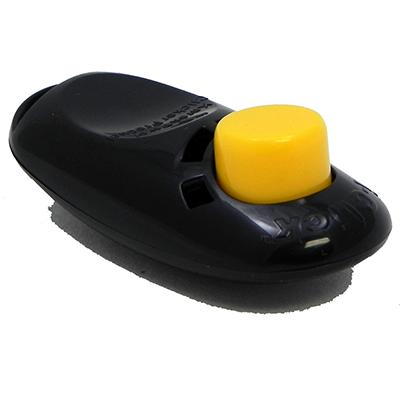
Speaking of Andrew behaving well, I've got my magic clicker out again.


source: Arcata Pet Supplies

and see: TagTeach autism

in Borders today

We picked Andrew up at camp today and learned that he had a fantastic week --- he was the best camper in the place, his counselor said.

Then he added, gesturing to his chums sitting under the canopy, "They would all say the same."

Wow!

He did pretty well in the car until we stopped at Office Max to pick up poster board for the Big Calendar that's going to change everyone's life around here.

Big tantrum at Office Max & then in the car 'cause he'd spotted a Borders and wanted to go there. But since he'd managed to pull himself out of it by the time I'd made my purchases, we decided to go to Borders after all.

And guess what I found in the school section?


A Frank Schaffer Singapore Math 6B Math Practice workbook.

Plus a lot of terrific Kumon workbooks (those are the two next to Singapore Math Practice.)

The cover of the Singapore math book says, "Activities based on the leading math program in the world--Singapore Math!"


introduction to Singapore Math - Level 3 (pdf file)
Andrew comes home from camp - July 2008


Mallard Fillmore lays it on the line

The cartoonist who does Mallard Fillmore either attended ed school at one point, or knows people who are in education:


reading on iPhones and Kindles

Speaking of dyslexia and visual deficits, I never got around to posting this link:

My iPhone has revolusionised my reading

A friend of mine tells me that her child, who has dyslexia, reads much more easily on the Kindle.

dyslexia is visual not phonological - ?

A few years ago, when I asked Daniel Willingham what journal I should read on the subject of cognitive science, he recommended Trends in Cognitive Sciences.

Yesterday, as I was trawling the journal for articles on habit learning, I came across an article from January 2010:  Dyslexia: a deficit in visuo-spatial attention, not in phonological processing by Trichur R. Vidyasagar and Kristen Pammer.
Developmental dyslexia, a specific difficulty in reading despite adequate learning opportunities, affects from 5 to 10 per cent of the population [1], but there are many manifestations of reading failure (Box 1). The etiology of dyslexia itself has been hotly debated for a long time. Theories have ranged from the reading disorder being a high-level learning disability, to a visual perceptual defect. Although it is generally recognized that a majority of poor readers have severe problems in phonological awareness [2,3], it is still an open issue whether the causal deficit in dyslexia is necessarily phonological. The debate is particularly timely in light of recent reevaluations – especially in the USA, Australia and UK – of how children learn to read.

In this paper, we present evidence for an alternative possibility, namely that a fundamental defect in the visual pathways, with or without a corresponding defect in the auditory system, can potentially cause a cascade of effects that can ultimately manifest as a reading problem, including phonological impairments. Understanding the mechanisms underlying dyslexia allows better informed policy making with regard to teaching and remedial intervention.

[snip]

Pre-reading phonological skills predict later reading failure, and phonological interventions have been demonstrated to be successful [2]. However, there are a number of reasons why poor phonological coding might not be the whole story, or even be an etiological factor in dyslexia. Some cases of dyslexia are clearly not phonological, for example where the reading errors are for irregular words, not non-words, and impairments in reading non-words are not always matched by deficits in phonological awareness [4,5]. There are reports of children [5,6] and adults with brain damage [7,8], who have difficulties in non-word reading but nevertheless exhibit good phonological awareness. Such evidence should, at the very least, lead us to question the causal link between a phonological deficit and dyslexia.

[snip]

Misordering of letters and reversal of letters in a word are common complaints from dyslexic readers, and sensitivity to spatial sequencing of the constituent components of text-like object arrays predicts reading in adults [12] and children [13]. Such difficulties in ascertaining the sequence of letters in words cannot be easily explained by phonological deficits. Studies of neurophysiological bases of pattern and object recognition indicate that such sequencing of letters is a non-trivial problem for the brain.

Trends in Cognitive Sciences Vol.14 No.2


reading on iPhones and Kindles

Friday, August 27, 2010

is Saxon Math different?

Jean wrote:
It's my understanding that the new look also reflects a new owner and a different approach--not so "Saxon-y." Some folks are quite annoyed about this. I'm not sure what I'll do--my daughter is in 76 and I'm a fan, and I'm wondering if I'm going to like the new editions as much.

Art Reed wrote:
I have never seen a "Math Cat" before although several of my senior high school calculus students thought they were "Cats."

If you would take a look at the January 2010 news article at Using Saxon Math I believe your question about which editions of John Saxon's books are still valid - and will be for several decades - will be answered.

If you still have questions you can reach me at my office at (580) 234-0064 (CST) during normal office hours.

true or false

(warning: four-letter words)


In The Know: Are Tests Biased Against Students Who Don't Give A Shit?

thanks to Susan S!

Cliff's Notes to the rescue

This image, from the Cliff's Notes page on Regular Pyramids, showed me how to solve the Blue Book problem I was stuck on.

The problem:

The pyramid show above [not drawn to scale] has altitude h and a square base of side m. The four edges that meet at V, the vertex of the pyramid, each have length e. If e = m, what is the value of h in terms of m ?

(A) m ÷ square root of 2
(B) m x square root of 3 ÷ 2
(C) m
(D) 2m ÷ square root of 3
(E) m x square root of 2

answer: A

source The Official SAT Study Guide, 2nd edition, p. 401

help desk - Blue Book

I can't do problem number 20 on page 401 in the Blue Book. At least not so far.

If you have the book, can you post the solution in the comments threat? I need the solution, not the answer: I have the answer. Have not yet tried to reverse engineer from the answer to the solution. That's next.

I'll scan the problem and post later on.

Thanks!

update - 10:33

solution here

The Official SAT Study Guide

Thursday, August 26, 2010

new look

Googling Saxon Math a couple of posts back, I learned that the Saxon books have "a different look."


source: 
Barb's People Builders

They sure do.

My books look like these.


source:
Buy used Saxon Math

I need a cat.

VR on using backgammon to teach probability

VR wrote:
I have been playing chess with my son for a few years. Chess is deterministic. In order to introduce him to probability concepts, I have started to play backgammon with him and bought him the "Backgammon for Dummies" book, which uses probability concepts to explain what is good play. Other games, such as blackjack and poker, can be used to teach probability. Many good games players can calculate probabilities well, even if they never read a book using the mathematical terminology Allison mentioned. Maybe books on those games can be used to teach probability in a palatable way.
Great minds think alike!

At some point, looking for self-teaching resources on probability, it came to me that I ought to stop trawling Amazon for introductory books on probability and start looking for introductory books on  card-playing.

Or card counting - ?

fyi: A lot of the Dummies books are terrific, I think. The book on public relations is very good, and I've just bought Grammar for Dummies because Stanley Fish said he likes it.

A few years back, I had a scheme to purchase all of the Dummies books and dedicate an entire bookshelf to them, the way people used to buy World Book Encyclopedias and give them pride of place.

Backgammon For Dummies

Allison on why there is relatively little help available for people self-teaching probability

I believe there are several reasons why there is so little help for discrete probability at this [beginning] level:

1. It requires significant mathematical maturity to even begin to understand what's going on.

2. Almost no one understands probability anyway.

3. Even if you do understand, it is extremely difficult to be careful and precise enough to never make a mistake in describing the problems or wording the solutions.

4. Most of work in discrete probability rewards cleverness. Few methods for tutoring individuals, or supporting individuals in their own learning can teach cleverness.

I'll elaborate on these in another comment.

But this is where you should start: Schaum's Outline of Theory and Problems of Probability (2nd edition)

as smart as a 5th grader


source:
Competition Math: for Middle School (Volume 1)
p. 48

More evidence that "repeating the same lesson over and over" works as well as Howard Gardner's Chinese teachers said it does. I knew how to solve this problem within a few seconds of looking at it, and the reason I knew how to solve this problem within a few seconds of looking at it is that I used the difference of two squares to rationalize denominators many, many times while working my way through Saxon Math.

Competition Math: for Middle School (Volume 1)

ego depletion


source:
The Unbearable Automaticity of Being
John A. Bargh, Tanya L. Chartrand
American Psychologist
1999 Volume 54, Issue 7 (Jul)
Pages 462-479 

Apparently eating radishes instead of available chocolates is a bad idea for any number of reasons.

what do parents think?

This is interesting:
Overwhelming numbers of the public link job opportunities and economic success to education preparation, but almost one-half of parents believe today's graduates are less prepared for work or college than they were.
2010 survey - PDK (pdf file)

Wow.

I would have predicted that the general public feels this way but not necessarily parents specifically.

I wonder if a majority of parents say students in their local schools are better prepared than students coming out of other schools --- ?

PDK poll

Quick post before I get back to work.

A few weeks ago we were talking about whether there is opposition to charter schools in suburban districts. Given the comments people left, I believe there is.

So it was interesting today to see that the new pdk poll includes this bullet point in the press release (pdf file):
We like public charter schools more every year! We’d be happy to have new public charter schools in our communities and more throughout the United States. 
Phi Delta Kappan was once described to me as the flagship of the constructivist movement; it's got to be one of the most important journals in public education. If pdk is phrasing a 'pro' finding on charter schools this way, I take that as a sign.