kitchen table math, the sequel

Thursday, July 15, 2010

college students studying less

Interesting story in the Globe:
According to time-use surveys analyzed by professors Philip Babcock, at the University of California Santa Barbara, and Mindy Marks, at the University of California Riverside, the average student at a four-year college in 1961 studied about 24 hours a week. Today’s average student hits the books for just 14 hours.

The decline, Babcock and Marks found, infects students of all demographics. No matter the student’s major, gender, or race, no matter the size of the school or the quality of the

SAT scores of the people enrolled there, the results are the same: Students of all ability levels are studying less.

“It’s not just limited to bad schools,” Babcock said. “We’re seeing it at liberal arts colleges, doctoral research colleges, masters colleges. Every different type, every different size. It’s just across the spectrum. It’s very robust. This is just a huge change in every category.”


[snip]

One problem is that they’re arriving in college with increasingly troubled study habits. According to survey data gathered by the Cooperative Institutional Research Program, or CIRP, the largest and longest-running study of higher education in the United States, incoming college freshmen have reported declining study habits for at least two decades. By 2009, nearly two-thirds of them failed to study even six hours a week while seniors in high school — a figure that has risen steadily since 1987.

Once they get to college, the figure improves, but there are many students today who appear to be doing very little whatsoever. In one CIRP survey subset last year, analyzing predominantly private institutions considered to be mid-level or high-achieving colleges, some 32 percent of college freshmen somehow managed to study less than six hours a week — not even an hour a day. Seniors studied only slightly more, with nearly 28 percent studying less than six hours a week. And other surveys of today’s students report similarly alarming results. The National Survey of Student Engagement found in 2009 that 62 percent of college students studied 15 hours a week or less — even as they took home primarily As and Bs on their report cards.

[snip]

[A]ccording to their research, the greatest decline in student studying took place before computers swept through colleges: Between 1961 and 1981, study times fell from 24.4 to 16.8 hours per week (and then, ultimately, to 14). Nor do they believe student employment or changing demographics to be the root cause.... study times are dropping for everyone regardless of employment or personal characteristics.

[snip]

One theory, offered by Babcock and Marks, suggests that the cause, or at least one of them, is a breakdown in the professor-student relationship. Instead of a dynamic where a professor sets standards and students try to meet them, the more common scenario these days, they suggest, is one in which both sides hope to do as little as possible.

“No one really has an incentive to make a demanding class,” Marks said. “To make a tough assignment, you have to write it, grade it. Kids come into office hours and want help on it. If you make it too hard, they complain. Other than the sheer love for knowledge and the desire to pass it on to the next generation, there is no incentive in the system to encourage effort.”

What happened to studying?
By Keith O’Brien
July 4, 2010

I wonder if there's been an upsurge in poster assignments. A friend of mine says he's pretty sure there has been ---

Wednesday, July 14, 2010

more fun than running a marathon

The SATs & Me (or Is it Me and the SATs)?

progress


number2.com

more from New York

A new report is spurring New York state to overhaul the way it defines academic proficiency for public-school students -- a massive change that could suddenly label tens of thousands of kids as being below grade level.

[snip]

Among older kids, the study found that those who did just well enough on their high-school math Regents to graduate -- scoring at or slightly above the passing grade of 65 -- had a less than 5 percent chance of getting placed in the easiest for-credit math course offered to CUNY freshmen.

Hiking class standards
By YOAV GONEN, Education Reporter
New York Post
Posted: 4:39 AM, July 14, 2010

Tuesday, July 13, 2010

Quinni Diagnostic Grammar Test

Professor Susan Daily
Quinnipiac University School of Law

I missed one and learned something I didn't know.

stop the madness

Terrific article on educational technology in the business section of the Sunday Times:
MIDDLE SCHOOL students are champion time-wasters. And the personal computer may be the ultimate time-wasting appliance. Put the two together at home, without hovering supervision, and logic suggests that you won’t witness a miraculous educational transformation.

Still, wherever there is a low-income household unboxing the family’s very first personal computer, there is an automatic inclination to think of the machine in its most idealized form, as the Great Equalizer. In developing countries, computers are outfitted with grand educational hopes, like those that animate the One Laptop Per Child initiative, which was examined in this space in April. The same is true of computers that go to poor households in the United States.

Economists are trying to measure a home computer’s educational impact on schoolchildren in low-income households. Taking widely varying routes, they are arriving at similar conclusions: little or no educational benefit is found. Worse, computers seem to have further separated children in low-income households, whose test scores often decline after the machine arrives, from their more privileged counterparts.

Ofer Malamud, an assistant professor of economics at the University of Chicago, is the co-author of a study that investigated educational outcomes after low-income families received vouchers to help them buy computers.

“We found a negative effect on academic achievement,” he said. “I was surprised, but as we presented our findings at various seminars, people in the audience said they weren’t surprised, given their own experiences with their school-age children.”

Why is it parents know these things and schools don't?

My own district now has a plan in place to wire the entire high school (& middle school? - I've forgotten) for internet access. I didn't pay close attention to the various presentations and pitches on the subject, but the idea seems to be that kids will never, ever get onto porn sites at school because we'll be buying some kind of super-duper firewall that cannot be beaten. Plus we'll have, as I recall, a central Screen of some sort that allows a central Employee of some sort to monitor every single site every single person in the building(s) is currently logged onto. (So....is this a full-time employee? With tenure? And step increases?)

We "need" this new technology because high school students need to bring their laptops to school to do online research during school hours.

The school will deal with the problem of students surfing the web in class by not allowing students to use their laptops in class. At least, I think that's the idea.

But of course some of the 504C kids have accommodations that specifically allow them to use a laptop to take notes, so how does the school prevent those kids from surfing the internet during class?


digital divide redux
In the United States, Jacob L. Vigdor and Helen F. Ladd, professors of public policy at Duke University, reported similar findings. Their National Bureau of Economic Research working paper, “Scaling the Digital Divide,” published last month, looks at the arrival of broadband service in North Carolina between 2000 and 2005 and its effect on middle school test scores during that period. Students posted significantly lower math test scores after the first broadband service provider showed up in their neighborhood, and significantly lower reading scores as well when the number of broadband providers passed four.

The Duke paper reports that the negative effect on test scores was not universal, but was largely confined to lower-income households...


technology immersion redux

The state of Texas recently completed a four-year experiment in “technology immersion.” The project spent $20 million in federal money on laptops distributed to 21 middle schools whose students were permitted to take the machines home. Another 21 schools that did not receive funds for laptops were designated as control schools.

[snip]

At the conclusion, a report prepared by the Texas Center for Educational Research tried to make the case that test scores in some academic subjects improved slightly at participating schools over those of the control schools. But the differences were mixed and included lower scores for writing among the students at schools “immersed” in technology. 

[snip]

Catherine Maloney, director of the Texas center, said the schools did their best to mandate that the computers would be used strictly for educational purposes. Most schools configured the machines to block e-mail, chat, games and Web sites reached by searching on objectionable key words. The key-word blocks worked fine for English-language sites but not for Spanish ones. “Kids were adept at getting around the blocks,” she said.

How disappointing to read in the Texas study that “there was no evidence linking technology immersion with student self-directed learning or their general satisfaction with schoolwork.”

When devising ways to beat school policing software, students showed an exemplary capacity for self-directed learning. Too bad that capacity didn’t expand in academic directions, too.
Technology immersion has nothing to do with self-directed learning. Seriously.

Monday, July 12, 2010

time with children

Don't ask me how it happened, but recently, in my travels, I came across the Bureau of Labor Statistics' American Time Use Survey. To analyze American Time Use, the Bureau uses an Activity Lexicon (pdf file), a 39-page list of things people do. 

Under sleeping, for example, the Bureau includes the following options:

sleeping
waking up
falling asleep
dreaming
dozing off
cat napping
napping
getting some shut-eye
getting up
dozing

Not sleeping is also a possibility:

insomnia
lying awake
tossing and turning
counting sheep

Two and a half pages are devoted to subcategory 01: Caring For and Helping HH Children.* Reading the list gave me a happy feeling:

01 Physical care for hh children
02 Reading to / with hh children
03 Playing with hh children, not sports
04 Arts and crafts with hh children
05 Playing sports with hh children
06 Talking with/listening to hh children

And so on. Time with children.

Subcategory 02 -- Activities Related to HH Children's Education -- brought me up short:

01 Homework (hh children)
helping hh child with homework
signing hh child's homework log
reviewing hh child's homework
checking hh child's homework for completion
helping hh child with a school project
picking up hh child's books/assignments
quizzing hh child before a test

and:

02 Meetings and school conferences (hh children)
observing hh child's class
meeting with guidance counselor of hh child
attending hh child's parent-teacher conference
meeting with principal of hh child
attending hh child's back-to-school night
talking to / with hh child's tutor
meeting w/school psychologist of hh child
meeting with hh child's tutor
talking with teachers of hh child
attending hh child's school open house
attending a PTA meeting
meeting w/school speech pathologist of hh child

and:

04 Waiting associated with hh children's education
waiting to meet with hh child's teacher

And that's it, the entire list apart from a one-line subcategory dedicated to home schooling of HH children. Six categories for helping with HH child's homework, 2 categories for dealing with HH child's tutor, another 4 categories for spending time on HH child's other school-related challenges and traumas (meeting with principal of hh child; meeting with school psychologist of hh child; meeting w/school speech pathologist of hh child...) Plus an entire category consecrated to time spent waiting to meet with hh child's teacher. Talk about fresh hell.

Where are the good parts?

Where is the "hh children's education" equivalent of "listening to hh child sing/recite" and "hearing about hh child's day," both of which appear under the heading "Caring For and Helping HH Children"?

Where is subcategory 05: discussing school's program to accelerate hh child's learning with school personnel?

Or subcategory 06: vetting hh child's merit aid award offers with admissions officers?

Tutors come up elsewhere in the lexicon as well. Under "Telephone calls to / from paid child or adult care providers," the Bureau lists three activities:

talking on phone to day care provider
talking on phone to a tutor
talking on phone to a babysitter

Tutors crop up again under Childcare Services:

01 Using paid childcare services
hiring a nanny or babysitter paying for lessons, instructions
paying for daycare
paying for tutorial services
checking out daycare facility
hiring a tutor
paying for summer camp
paying for after school care program
talking to / with the daycare provider
meeting with daycare providers
talking to / with the camp counselor
talking to / with babysitter

Finally - and this took me by surprise - tutors appear in Category 04, Subcategory 02: Activities Related to Nonhh Children's Education. In Category 04 we find the American people engaging in all of the aforementioned parental Activities on behalf of other people's children:**

observing nonhh child's class
meeting w/school speech pathologist of nonhh child
observing nonhh child's class
meeting with guidance counselor of nonhh child
attending non-hh child's parent-teacher conference
meeting with principal of nonhh child
attending non-hh child's back-to-school night
talking to / with nonhh child's tutor
meeting w/school psychologist of nonhh child
meeting with nonhh child's tutor
talking with teachers of nonhh child
attending nonhh child's school open house
attending PTA meeting


I wonder what Activities Related to HH Children's Education will look like in 2020?

I'd like to see a new activity on the list: visiting private, parochial, charter, and public schools to decide where to spend your child's tuition vouchers.


* HH = household

**see Anonymous for an explanation

Saturday, July 10, 2010

projects we have known and loved

The numbers are imprecise, but according to a 1988 report by the National Council of Teachers of English, her novel, "To Kill a Mockingbird," was required reading in three-quarters of America's high schools. Since its publication 50 years ago this summer, it probably ranks just behind "The Adventures of Huckleberry Finn," with American high-school students not only required to read the book but to tackle related projects. These range from drawing the courthouse where Tom Robinson, a black man accused of raping a white woman, was defended by Atticus Finch, to writing articles for the Maycomb Tribune recounting the trial, and recasting the movie with contemporary actors. (In 2006 my daughter, attending a public high school in New Jersey, cast Kevin Kline as Atticus and Abigail Breslin as his young daughter, Scout.)
What 'To Kill a Mockingbird' Isn't
By ALLEN BARRA
JUNE 24, 2010

Thursday, July 8, 2010

score inflation in NY

Over the last few years, student performance has soared on math and English tests across New York State, with the most dramatic improvements evident in urban districts such as Buffalo, leading many to celebrate the progress.

But now, state education officials say the progress may not have been quite what it seemed.

Weaknesses in the state’s testing and scoring systems over the last several years created what Education Commissioner David M. Steiner equates to systemic “grade inflation.”
  • Students who score at the “proficient” level in middle school math, for instance, stand only a 1-in-3 chance of doing well enough in high school to succeed in college math, he said.
  • Students begin getting “inflated” test scores before they hit high school, state officials said. A student who scores a 3 on a state math test — which is considered “proficient” on the scale of 1 to 4 — stands only a 30 percent chance of getting an 80 on the high school Regents math exam, they said.
  • ...a student who scored at the proficient level on a state test in 2006 was in the 45th percentile on the national test, meaning that 55 percent of students in the country scored better. In 2009, the same score on the state test would land a student in the 20th percentile on the national test, meaning that 80 percent of students nationwide scored better.

The state Education Department recently asked a group of experts, led by Harvard University’s Daniel M. Koretz, to determine how closely eighth-grade scores correlate to high school Regents exam scores — and how well those Regents exam scores correlate to success in college.

Flawed tests distort sharp rise in scores by students
By Mary B. Pasciak
Updated: July 06, 2010, 11:42 pm / 19 comments
Published: July 07, 2010, 6:35 am

Monday, July 5, 2010

The Tension...

I've posted something to another blog that I thought might also be appropriate for KTM. This community has always felt very comfortable to me, but also challenges me to think! Posters and commenters have focused on educational issues [SteveH just nailed it!] rather than "politics"...

Anyway, HERE it is!
Have a wonderful day!

ps-Catherine, I'm not sure how to tag it, so please feel free to do so if you wish.

Forget Grade Levels?

I saw this in our paper yesterday.

Forget grade levels

It's interesting to see how ed school thought can be spun any which way.

"The current system of public education in this country is not working" said Superintendent John Covington. "It's an outdated, industrial, agrarian kind of model that lends itself to still allowing students to progress through school based on the amount of time they sit in a chair rather than whether or not they have truly mastered the competencies and skills."


Students progress through school only if they allow them to progress. When I grew up, kids were held back or had to go to summer school. Apparently, since then, they've moved to an "industrial, agrarian kind of model". This is really stupid thinking.

With this new model, are they going to continually keep kids in second grade if they don't pass the proficiency test? Speaking of which, I assume that these are minimal grade level state tests. However, it might force schools to actually try to get kids to pass the exam and not just "trust the spiral". It will force them to deal with the issues sooner rather than just pass the problems along and then blame the kids or parents or poverty.


"This system precludes us from labeling children failures," Covington said. "It's not that you've failed, it's just that at this point you haven't mastered the competencies yet and when you do, you will move to the next level."

What about the 12 year old who still hasn't gotten past the 2nd grade material? What about differentiated learning? That's not a "factory model". However, both models have the same core philosophy. The onus for learning is on the kids and there is no direct teaching. At least the approach descrbed here allows kids to accelerate out. I don't know what they are accelerating to or around, but it at least forces schools to define what is required knowledge and skills for each grade. Unfortunately, we know what those standards are.


"Greg Johnson, director of curriculum and instruction for the Bering Strait School District in Alaska, recalled that before the switch there were students who had been on honor roll throughout high school then failed a test the state requires for graduation."


Incompetence. How is that going to change with the new model? They will show kids the state tests for each grade and leave it up to them to meet the low cutoffs. Then they will have kids who meet the low state graduation requirements when they are 14. What next? They will have kids stuck as sophomores. What next?

Will they have low and high grade level standards, not just pass/fail cutoffs? What will high grades mean for kids? Will they properly map the math required (and test grades) for algebra in 8th grade back to Kindergarten?

At least this model forces schools to deal with these issues. With differentiated instruction, their heads are completely in the sand - or somewhere else.

Saturday, July 3, 2010

full stop

Our school system has solved their efficiency problem by not only slowing gifted students but seemingly requiring them to stop all forward momentum. No acceleration and no 'enrichment' either. If you're done with an assignment alphabetize folders or tutor another student.

-Lisa


Same here. When full inclusion came six years ago, enrichment and in-class ability grouping were totally canceled in the elementary. Nothing above grade level can be offered. The old practice of going to a different class or grade to join an appropriate reading group was ended. If the student is done, s/he can read, draw, or navel gaze.

-lgm

My own district replaced the SRA math series with Math Trailblazers 6 years ago, eliminating achievement grouping as part of the package. Since Trailblazers moves more slowly than SRA, this meant that the advanced students were doubly decelerated. They lost their accelerated curriculum and they were now learning less in the regular curriculum than the non-accelerated kids had learned in the past.

Recently the superintendent told the school board that Trailblazers is built for and depends upon heterogeneous grouping; if you're going to have Trailblazers you can't have grouping and if you're going to have grouping you can't have Trailblazers.

So naturally she's committed to Trailblazers.

Friday, July 2, 2010

testing

ok, I'm writing a blog post about a book sold on Amazon: Driven by Data: A Practical Guide to Improve Instruction by Paul Bambrick-Santoyo.

hmmm

Interesting.

my thoughts exactly


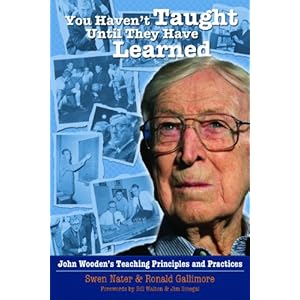
You Haven't Taught Until They Have Learned: John Wooden's Teaching Principles and Practices
by Swen Nater, Ronald Gallimore, Bill Walton (Foreword), Jim Sinegal (Foreword)

basic skills

BEDFORD, Ohio — Factory owners have been adding jobs slowly but steadily since the beginning of the year, giving a lift to the fragile economic recovery. And because they laid off so many workers — more than two million since the end of 2007 — manufacturers now have a vast pool of people to choose from.

Plenty of people are applying for the jobs. The problem, the companies say, is a mismatch between the kind of skilled workers needed and the ranks of the unemployed.

[snip]

Here in this suburb of Cleveland, supervisors at Ben Venue Laboratories, a contract drug maker for pharmaceutical companies, have reviewed 3,600 job applications this year and found only 47 people to hire at $13 to $15 an hour, or about $31,000 a year.

The going rate for entry-level manufacturing workers in the area, according to Cleveland State University, is $10 to $12 an hour, but more skilled workers earn $15 to $20 an hour.

All candidates at Ben Venue must pass a basic skills test showing they can read and understand math at a ninth-grade level. A significant portion of recent applicants failed, and the company has been disappointed by the quality of graduates from local training programs. It is now struggling to fill 100 positions.

Factory Jobs Return, but Employers Find Skills Shortage
By MOTOKO RICH
Published: July 1, 2010

Here's Tyler Cowen:
Currently political debate is focused on the short-run employment issue, but a lot of the problem is probably long-run in nature.

One simple hypothesis is that a lot of workers weren’t producing much value, but firms were willing to carry them in good times. When bad times came, firms cut them loose and also took greater trouble to identify them in the first place.

Stimulus alone won’t give those workers jobs because, as it stands now, their labor simply isn’t worth very much. The longer-term issue is how to improve the American educational system. This includes creating a culture where more parents value education, school choice is more available to bypass dysfunctional local systems, and teachers are more subject to incentives to encourage effectiveness.

President Obama does want to make progress on all those fronts, but it’s not a battle which can be won mainly at the federal level. We need to have a culture which simply does not tolerate bad local school districts. We’re a long way from that, so we need to focus on more than just the short-term alone.

June 24, 2010, 6:20 pm
Can Obama Create More Jobs Soon?
By THE EDITORS


I'd love to see that test.

I wonder if they're using Accuplacer?


The Race Between Education and Technology

momof4

It doesn't say anything good about ed school that only one basic science course is required. BTW, as first-graders in the mid-50s, my class learned parts of plants, plant nutrition, photosynthesis, heliotropism etc. Why am I not surprised that global warming is part of this curriculum? I also agree with the last comment about the inefficiency of this approach, but efficiency seems to be fighting with mastery for last place in the pantheon of ideas that concern the ed system.
I love that: efficiency fighting with mastery for last place.

In my experience it's no contest. Mastery is last and efficiency isn't even in the running.

Public schools are almost anti-efficiency at all levels: in hiring and spending as well as teaching and learning.

That's why public schools are happy to slow the progress of gifted students by substituting enrichment for acceleration.

Thursday, July 1, 2010

edspeak

At other times, the board is moved to the front of the room, and students take turns solving math problems, sorting items into groups and matching words with their meanings.

letter to the editor quoted in:
The Great Whiteboards Debate Rages On
Anthony Reborda
Education Week
In my world, the set consisting of students who spend class time "solving math problems" does not intersect with the set consisting of students whose teachers ask them to "sort items into groups."

Wednesday, June 30, 2010

Google search

how they do it

definition

constructivist classroom: A classroom in which the teacher uses pedagogical methods that are based on the constructivist theory of learning. The constructivist theory holds that the student is the center of learning, and the teacher should act as a facilitator of the student's learning, not as an instructor. The constructivist classroom takes many forms, but at heart it is based on the belief that the student is the one who does the learning and therefore must take responsibility for his or her own learning.
EdSpeak: A Glossary of Education Terms Phrases, Buzzwords, and Jargon
by Diane Ravitch
p. 58


constructivism
Constructivist theory posits that children build new information onto preexisting notions and modify their understanding in light of new data. In the process, their ideas increase in complexity and power. Constructivist theorists dismiss the idea that students learn by absorbing information through lectures or repeated rote practice.
Education Week Guide to K-12 Terminology
p. 23
In the public schools: constructivism.

In the great charter schools: Lemov's Taxonomy.

TERC

Candace Chick is the first to admit that she’s not an expert in science. Far from it, the teacher at the Samuel W. Mason Pilot Elementary School in Roxbury, Mass., only took one basic science class during her undergraduate and graduate studies and, until recently, quaked at the idea of teaching the properties of matter to her fifth-grade students. “I have always been insecure about science,” she says. “It is not one of my strengths.”

But now, she is positively ebullient about the progress both she and her students have made in the subject. Her class has been investigating molecular change, conducting hands-on experiments, and watching computer simulations. The students’ knowledge has grown deeper than simply being able to define terms like “condensation” and “evaporation.” They readily discuss their ideas and frequently engage in polite, intellectual arguments that influence each others’ learning. “Their knowledge isn’t, ‘Oh, there is a puddle on the sidewalk and when the sun comes out it evaporates and goes magically into a cloud and then it comes down again when it rains,’’’ Chick explains. “They understand how those molecules start to move and bounce around like mad as they evaporate. They really understand this in a way that they didn’t before.”

Chick’s class just completed the third year of a research endeavor called The Inquiry Project, a partnership between teachers, TERC, and Tufts University that teaches concepts like weight, volume, and density in grades 3–5 to lay the foundation for later introduction to molecular theory. In third grade, students begin exploring materials and then move on to investigating weight and volume, using density cubes and balance scales, among other tools. They proceed from comparing the “felt weight” of cubes made from different materials to measuring actual weight on a balance scale. They ask questions along the way. Can two objects of the same size weigh different amounts? Does a tiny piece of clay have weight? The students are asked to discuss their findings at every step: the goal of this “productive talk” is to lead to deeper understanding.

Chick worked with an Inquiry Project coach, who not only helped her overcome her inhibitions about science but also encouraged her to lead productive class discussions.

[snip]

The goal is to shift the students’ way of thinking from what Anderson calls “force-dynamic reasoning” to what he terms “scientific discourse.” Force-dynamic reasoning, typical in elementary school, is a way of viewing the world in terms of “actors” with purposes. For instance, the main purpose of a tree (the “actor”) is to grow, and in order to grow, it needs water, air, sunlight, and soil. However, the scientific explanation is that the tree uses the sun as an energy source to convert carbon dioxide and water into glucose, which is the building block of the tree. “The scientific story is one of transformation of matter and energy,” Anderson explains. “If we are interested in preparing kids to think about carbon in our atmosphere and in our various environmental systems and how it effects global warming, we have to make the transition from force-dynamic reasoning to scientific reasoning, where they are thinking about matter and energy.”

The fourth-grade curriculum outlines a pathway toward that transition in thinking. It’s not about memorizing definitions of, say, photosynthesis, but about actually transforming how students think. Students begin by watching time-lapse videos of plants growing. They then grow plants under different conditions—with or without water and light. They measure the results over time and ultimately determine that plants need water, air, and light to grow. They then examine plants on a microscopic level and learn about their cellular makeup, which leads to an exploration of how plants make their own food and where they store it.

Through tending the plants and watching them grow, students can begin to view the plants not as actors, but as part of an ecosystem. Anderson and his colleagues are still generating data on what works, but the goal is for the students to understand basic underlying principles of science, such as conservation of matter and energy. “Facts alone,’’ he says, “are not enough.’’

Learning Progressions in Science
By PATTI HARTIGAN
Harvard Education Letter
Volume 26, Number 4
July/August 2010

I'm wondering what exactly these 4th grade students know about photosynthesis at the end of the school year.

Cheryl on the Khan Academy

I l-o-o-o-v-e Khan Academy. I teach 4th grade, and I have my students use it for differentiated reinforcement of concepts that they need extra help/practice with. We have 1-1 netbooks, so it's easy to do.

Lsquared on math knowledge and teachers

... I believe that studies have shown that math knowledge positively correlates with teaching ability for secondary teachers, but not necessarily for elementary teachers.

On the other hand, as someone who teaches math to future elementary teachers, there are some who I'm convinced will make better teachers of elementary math than others, and often (though not always) they are good at math in general. Of the ones that I privately think to myself--I would be delighted for my child to be in his/her class, maybe 1/3 of them are math minors, as opposed to maybe 1/8 of a typical class being math minors...And there are a few mathematicians (not at the university where I teach now) who I'm not sure should be teaching math to college students, much less elementary students, because they have no talent or interest in figuring out how learners think.
I'm surprised to learn that 1/8 of students taking Lsquared's class are math minors.

Tuesday, June 29, 2010

listmania

Have I mentioned that I collect Listmanias?

Well, I do.

This week's find: best listmania on SAT prep I've seen thus far.

Thanks to Tertullian, I've spent the past two days reading The Talent Code and Arvin Vohra. Arvin Vohra's book is a revelation, especially the part where he advises parents to use Everyday Math after explaining the importance of a coherent, hierarchically organized curriculum and extensive memorization of math facts and formulas from an early age.

Say what?

The Asian Method

Math Mammoth

Crimson Wife recommends the Math Mammoth books.

lgm on where to start in Singapore Math

Start at the beginning. A big key is practicing number bonds until you know them so well that the possibilities just pop up automatically when you see a number. The mental math practice is worthwhile too.

Number2.com

I'm beginning to think there may be something to the disruptive technology argument.

First the Khan Academy ("my goal is to cover everything") and now Number2.com, which C. found while I was in Minneapolis, attending msmi2010.
Number2.com is the only website that offers students access to comprehensive free online test preparation courses for the SAT, ACT, and GRE. How do we do it? Number2.com earns revenue from sponsorships and licensing.

The company was founded by professors and graduate students who wanted to make high quality test preparation universally accessible. In 1999 Eric Loken and Josh Millet were graduate students studying for their PhDs at Harvard University when they began teaching free SAT prep classes in the Boston area. Seeking to expand their services to the Internet, they teamed up with Vincent Crespi, a professor of physics at Pennsylvania State University, who had created a test prep website called Number2.com in 1995. With the help of a great technologist, Filip Radlinski, they launched a new version of the site in September, 2000. Eric and Josh now also run an employee testing company.

Since 2000, over 2 million students have enrolled in Number2.com's online courses, and the web site now receives over 50 million hits per month. In 2002 Number2.com was acquired by Xap Corporation....

about Number2

C. likes it because when he can't solve a problem, Number2 gives him a hint instead of the answer.

In theory, the text prep books could do that, too, but they don't.

Khan Academy

Westchester Laura put me onto the Khan Academy - wow.

Apparently Salman Khan has been working on his been working on his website full-time since September 2009, but I'm just hearing tell.

Here he is on the question of how he knows the Khan Academy is effective:
My background is in math, computer science, and investment management, so I think you can imagine that no one is more obsessed with data and analytics than me. The chart to the right is provided by YouTube. It can be used to determine if and/or when viewers' attention falls off at a certain point of a video. I can then go back and try to identify (and possibly fix) what happened at that point in the video. This next chart shows the average (black line) progress of a cohort of 30 rising 8th graders on the Khan Academy software over a 6-week period. The horizontal axis is "days working on the site" and the vertical axis is "modules completed." The green lines show one standard deviation above and below the mean. This chart exemplifies both the level of data we are capturing and also highlights the importance of individualized, self-paced instruction and real-time assessment. The purple line shows a student who may have been deemed "slow" by traditional assessments because she was more than one standard deviation below the class average after working on the site for a few days. The reality is that she just needed more time ramping up on negative numbers than the other students in the cohort. Once she was given the chance to become proficient on that concept, she raced forward and ended up being one of the top students in the cohort.

More than the data, however, it is the anecdotal evidence from users that has convinced me to quit my job and make this the focus of my life. I receive hundreds of letter and comments a week. Many are simply notes of strong appreciation, but several reach the level of being genuinely inspiring. Here is a letter I received from a YouTube user in September 2009 (I bolded some of the text):

Mr. Khan,

No teacher has ever done me any good--this may sound harsh but I mean it quite literally. I was force fed medication to keep me from talking and chastised for not speaking out when called on. Where I am from blacks are not welcomed with open arms into schools--my mother and her sisters had to go to a small shack two hours from home when they went to school. About five years ago my family collected enough money to move from where i was born, so that I could have a chance at having an education and living a real life. But without a real mastery of elementary math I was slow to progress.

I am now in college and learning more than I ever have in my life. But an inadequate math background has been holding me back. I found the Kahn Academy in June of 2009, right after I completed Math 141 ( a college algebra course). I have spent the entire summer on your youtube page. And I just wanted to thank you for everything you are doing. You are a Godsend. Last week I tested for a math placement exam and I am now in Honors Math 200. No question was answered incorrectly. My placement test holder was so impressed by the breadth of my knowledge of math that he said I should be in Linear algebra.

Mr. Khan, I can say without any doubt that you have changed my life and the lives of everyone in my family.

I wish you and the Khan Academy the best of luck,

How did you get started?

My uncle's family visited me in Boston after my wedding in the summer of 2004. At some point during the trip, my Aunt told me that her daughter (my cousin) was having trouble with "unit conversion" which was not allowing her to be placed in the more advanced math track for 7th grade. Nadia was clearly a very bright girl, so I made a deal with her. I'd remotely tutor her for an hour after work as long as she was willing to do any extra work I gave her.

I began remotely tutoring Nadia in August of 2004. She was in New Orleans--where I also grew up-- so we used a telephone to talk and Yahoo Doodle as a shared notepad. Nadia ended up catching up and getting ahead of her class so I started tutoring her brothers, Arman and Ali, as well. Eventually, word got around and I was remotely tutoring and handful of cousins and family friends. Scheduling around my work, their soccer practice, and the different time zones became a little ridiculous, so I started to make YouTube videos for them to watch in their own time, at their own pace.

It didn't take long to see that other students (including adult learners) were hungry for videos like these so I kept going!

Even before I made the videos, I started writing simple Javascript problem generators so that my cousins would never run out of practice problems. I wanted to know when and how they were doing the problems, so I added a database to track usage. 70 modules and 10,000 lines of code later (much of which has made the software adaptive) , it has morphed into the adaptive math program on our site.

How did you have the time to do this while working full-time?

My wife was doing her residency--in internal medicine-- from 2005 to 2008, so there were many nights/weekends where she was working and I would have felt guilty doing anything less productive. I also try to watch very little television. On top of that, I was working at an investment fund that had me working 5am to 2pm (we were working East Coat hours from California) so my afternoons were free (although I did go to bed at 9).

How are you funding/making money off of this?

I quit my day job as of September 2009 to work on this full-time and was digging into my savings until recently. In May, some generous individuals have given large enough gifts for me to take a salary for the time being. I could be aggressive with advertising on the site, but I don't want to do that until I have to. I am speaking to some foundations that might enable Khan Academy to get to the next level. If you know of potential partner foundations who would agree that there is no better way to educate and enlighten the world, they shouldn't hesitate to email me (sal 'at' khanacademy 'dot' org) :)

Khan Academy is a IRS-recognized 501c3 not-for-profit organization. My goal is to make it self-sustaining in the next five years.

Are you interested in turning this into a business? Maybe with some VC funding?

I've been approached several times, but it just didn't feel right. When I'm 80, I want to feel that I helped give access to a world-class education to billions of students around the world. Sounds a lot better than starting a business that educates some subset of the developed world that can pay $19.95/month and eventually selling it to some text book company or something. I already have a beautiful wife, a hilarious son, two hondas and a decent house. What else does a man need?

With that said, if you are a social venture capitalist and are looking to deploy capital with the highest possible social return per dollar invested, we should talk. I think you'll find that there is no more measurable, scalable and high impact way to educate the world.

Did you do all of the videos?

As of today (6/10/2010), yes. All 1400+ videos have been made by me. Volunteers have begun to translate the videos into other languages. Here is the Khan Academy en espanol. Hope to have other channels in the not-too-far-off future!

What topics do you plan to cover?

My goal is to cover everything. Yes, everything! Most of k-12 math has already been done (although I do need to make 20 or 30 more elementary math videos). My goal really is to keep making videos until the day I die (which will hopefully not be for at least another 50 or 60 years). Should give me time to make several tens of thousands of videos in pretty much every subject.

What is the long-term goal for the Khan Academy?

I see Khan Academy becoming the world's first free, world-class virtual school where anyone can learn anything--for free.

The videos are just part of the vision. We hope to build out the adaptive software to cover all the topics that the videos cover. We also intend to develop simulation games to give more nuanced and applied understanding of concepts.

SAT prep, too
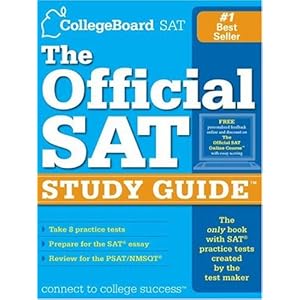
We have done all 8 math practice tests (432 problems) in "The Official SAT Study Guide" by the College Board (which you should buy) in the 100+ videos below.

We recommend that you buy the book and take at least one practice test (3 math sections) per week during each of the 8 weeks prior to the exam. In the earlier weeks, you should focus on comprehending and working on every problem. In the second four weeks, you should focus on speed and eliminating careless mistakes (although you should still try to do any problems that you didn't get to). After grading each of your exams, watch the corresponding video below.

If you have the self-discipline to take the practice tests, review your problems and watch the videos, we think you will be as prepared as anyone. You should view these videos as your on-demand personal tutor.

If you need to review (or learn) underlying mathematical concepts covered on the SAT, we have over 800 videos on general math topics in our video library.

SAT Preparation

I just watched the solution to question 17 on page 412 and had a major duh moment.

Which is exactly what I should be having -- but am not having with the SAT prep books, which frequently make simple problems seem more complex, at least to me.


SAFMEDS how to

SAFMEDS on the Web
Guidelines and Considerations for SAFMEDS
by John W. Eshleman, Ed.D.


Am not yet a user of SAFMEDS, but I will be.

Meanwhile, good news on the SAT prep front: after 2 weeks of study I appear to have added 50 points to my score, and I've got C. working and progressing, too. More anon.

SAT scores flash: C. earned a 780 on his SAT II World History test, which likely means he missed only 1 question on the test.

His percentile?

94th - ! Six percent of the test takers got every single question correct.

(C. is going into his junior year.)

Monday, June 28, 2010

Sen. Robert Byrd; in memorium

Sen. Robert Byrd passed away this morning at the age of 92. I remember listening to many of his speeches on the closed circuit TV that was always on when I did my stint on the Hill in 2002. Yes, many of his speeches droned on and on, and covered topics often as mundane as how his wife made the best cranberry sauce he ever tasted. But he also was known for fiery rhetoric and a sharp wit that more than made up for his ramblings.

I'm a bit biased, but in my estimation, his finest oratorial work was his speech on "Rainforest Math", given on June 9, 1997, and can be found in the Congressional Record. Following is an excerpt. I strongly encourage you to "read the whole thing" as they say in blog land. May he rest in peace:

I have recently obtained a copy of the same strange textbook—this is it, as I have already indicated—and I have to go a step further and call it whacko algebra.

This textbook written by a conglomerate of authors lists 5 so-called ‘‘algebra authors,’’ but it boasts 20 ‘‘other series authors’’ and 4 ‘‘multicultural reviewers.’’ We are talking about algebra now. Why we need multicultural review of an algebra textbook is a question which I would like to hear someone answer, and the fact that there are 4 times as many ‘‘other series authors’’ as ‘‘algebra authors’’ in this book made me suspect that this really was not an algebra textbook at all.

A quick look at the page entitled, ‘‘Getting Started’’ with the sub heading, ‘‘What Do You Think,’’ quickly confirmed my suspicions about the quirky fuzziness of this new-new approach to mathematics. Let me quote from that opening page.

“In the twenty-first century, computers will do a lot of the work that people used to do. Even in today’s workplace, there is little need for someone to add up daily invoices or compute sales tax. Engineers and scientists already use computer programs to do calculations and solve equations. “

What kind of a message is sent by that brilliant opening salvo? It hardly impresses upon the student the importance of mastering the basics of mathematics or encourages them to dig in and prepare for the difficult work it takes to be a first-rate student in math. Rather it seems to say, ‘‘Don’t worry about all of this math stuff too much. Computers will do all that work for us in a few years anyway.’’

Can you imagine such a goofy passage in a Japanese math textbook? I ask what happens if the computer breaks down or if we forget and leave the pocket calculator at home? It appears that we may be on the verge of producing a generation of students who cannot do a simple mathematical equation in their heads, or with a pencil, or even balance a checkbook.

The ‘‘Getting Started’’ portion of the text goes on to extol the virtues of teamwork, to explain how to get to know other students and to ask how teamwork plays a role in conserving natural resources. What, I ask—what in heaven’s name does this have to do with algebra? I took algebra instead of Latin when I was in high school. I never had this razzle-dazzle confusing stuff. Page 5 of this same wondrous tome begins with a heading written in Spanish, English, and Portuguese, a map of South America and an indication of which language is spoken where. Pythagorus would have been scratching his head by this time, and I confess, so was I.

This odd amalgam of math, geography and language masquerading as an algebra textbook goes on to intersperse each chapter with helpful comments and photos of children named Taktuk, Esteban, and Minh. Although I don’t know what happened to Dick and Jane, I do understand now why there are four multicultural reviewers for this book. However, I still don’t quite grasp the necessity for political correctness in an algebra textbook. Nor do I understand the inclusion of the United Nations Universal Declaration of Human Rights in three languages, a section on the language of Algebra which defines such mathematically significant phrases as, ‘‘the lion’s share,’’ the ‘‘boondocks,’’ and ‘‘not worth his salt.’’

By the time we get around to defining an algebraic expression we are on page 107. But it isn’t long before we are off that boring topic to an illuminating testimony by Dave Sanfilippo, a driver with the United Parcel Service. Sanfilippo tells us that he ‘‘didn’t do well in high school mathematics ’’ but that he is doing well at his job now because he enters ‘‘information on a pocket computer’’—hardly inspirational stuff for a kid struggling with algebra.

From there we hurry on to lectures on endangered species, a discussion of air pollution, facts about the Dogon people of West Africa, chili recipes and a discussion of varieties of hot peppers— no wonder our pages are having difficulty containing themselves. They are almost in stitches—what role zoos should play in today’s society, and the dubious art of making shape images of animals on a bedroom wall, only reaching a discussion of the Pythagorean
Theorem on page 502. By this time I was thoroughly dazed and unsure of whether I was looking at a science book, a language book, a sociology book or a geography book. In fact, of
course, that is the crux of the problem.

I was looking at all of the above. This textbook tries to be all things to all students in all subjects and the result is a mush of multiculturalism, environmental and political correctness, and various disjointed discussions on a multitude of topics which certainly is bound to confuse the students trying to learn and the teachers trying to teach from such unfocused nonsense. It is not just nonsense, it is unfocused nonsense, which is even worse. Mathematics is about rules, memorized procedures and methodical thinking.

We do memorize the multiplication tables, don’t we? Else how will one know that nine 8s are 72 and that eight 9s are 72. This new-new mush-mush math will never produce quality engineers or mathematicians who can compete for jobs in the global market place. In Palo Alto, CA, public school math students plummeted from the 86th percentile to the 56th in the first year of new-new math teaching. This awful textbook obviously fails to do in 812 pages what comparable Japanese textbooks do so well in 200. The average standardized math score in Japan is 80. In the United States it is 52.


Sunday, June 27, 2010

help is on its way


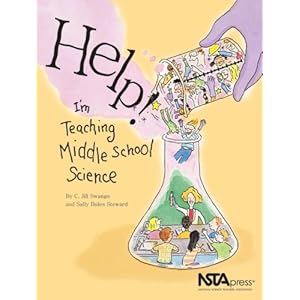
Help I'm Teaching Middle School Science
by C. Jill Swango


"A great guide to the practical aspect of teaching inquiry-based middle school science."

Home Algebra I Round-Up

Maria Miller of Math Mammoth and Homeschoolmath.net has recently posted her overview of homeschool algebra I options.

I found it to be a nice overview, though I wish she would have touched on Singapore's New Elementary Math series. (No one ever seems to talk about that, it's like Singapore drops off the face of the earth after 6th grade. Is that because they're not as good, or because they're not as friendly to use in a home setting, or ... ? But I digress.) I'll definitely start looking into Art of Problem Solving Introduction to Algebra.

Even though Algebra I is still a way off in my particular family, I'm always on the lookout for what's coming down the pike for my kids. Gotta know what the bridge is supposed to look like when you're done if you're going to build it right.

Saturday, June 26, 2010

student evaluations & college calculus at the USAFA

In primary and secondary education, measures of teacher quality are often based on contemporaneous student performance on standardized achievement tests. In the postsecondary environment, scores on student evaluations of professors are typically used to measure teaching quality. We possess unique data that allow us to measure relative student performance in mandatory follow‐on classes. We compare metrics that capture these three different notions of instructional quality and present evidence that professors who excel at promoting contemporaneous student achievement teach in ways that improve their student evaluations but harm the follow‐on achievement of their students in more advanced classes.

[snip]

[O]ur study uses a unique panel data set from the United States Air Force Academy (USAFA) in which students are randomly assigned to professors over a wide variety of standardized core courses. The random assignment of students to professors, along with a vast amount of data on both professors and students, allows us to examine how professor quality affects student achievement free from the usual problems of self-selection. Furthermore, performance in USAFA core courses is a consistent measure of student achievement because faculty members teaching the same course use an identical syllabus and give the same exams during a common testing period.5 Finally, USAFA students are required to take and are randomly assigned to numerous follow-on courses in mathematics, humanities, basic sciences, and engineering. Performance in these mandatory follow-on courses is arguably a more persistent measurement of student learning. Thus, a distinct advantage of our data is that even if a student has a particularly poor introductory course professor, he or she still is required to take the follow-on related curriculum.6

[snip]

Our findings show that introductory calculus professors significantly affect student achievement in both the contemporaneous course being taught and the follow-on related curriculum. However, these methodologies yield very different conclusions regarding which professors are measured as high quality, depending on the outcome of interest used. We find that less experienced and less qualified professors produce students who perform significantly better in the contemporaneous course being taught, whereas more experienced and highly qualified professors produce students who perform better in the follow-on related curriculum.

[snip]

Results show that there are statistically significant and sizable differences in student achievement across introductory course professors in both contemporaneous and follow-on course achievement. However, our results indicate that professors who excel at promoting contemporaneous student achievement, on average, harm the subsequent performance of their students in more advanced classes. Academic rank, teaching experience, and terminal degree status of professors are negatively correlated with contemporaneous value-added but positively correlated with follow-on course value-added. Hence, students of less experienced instructors who do not possess a doctorate perform significantly better in the contemporaneous course but perform worse in the follow-on related curriculum.

Student evaluations are positively correlated with contemporaneous professor value-added and negatively correlated with follow-on student achievement. That is, students appear to reward higher grades in the introductory course but punish professors who increase deep learning (introductory course professor value-added in follow-on courses). Since many U.S. colleges and universities use student evaluations as a measurement of teaching quality for academic promotion and tenure decisions, this latter finding draws into question the value and accuracy
of this practice.

These findings have broad implications for how students should be assessed and teacher quality measured. Similar to elementary and secondary school teachers, who often have advance knowledge of assessment content in high-stakes testing systems, all professors teaching a given course at USAFA have an advance copy of the exam before it is given. Hence, educators in both settings must choose how much time to allocate to tasks that have great value for raising current scores but may have little value for lasting knowledge. Using our various measures of quality to rank-order professors leads to profoundly different results. As an illustration, the introductory calculus professor in our sample who ranks dead last in deep learning ranks sixth and seventh best in student evaluations and contemporaneous value-added, respectively. These findings support recent research by Barlevy and Neal (2009), who propose an incentive pay scheme that links teacher compensation to the ranks of their students within appropriately defined comparison sets and requires that new assessments consisting of entirely new questions be given at each testing date. The use of new questions eliminates incentives for teachers to coach students concerning the answers to specific questions on previous assessments.

[snip]

Students at USAFA are high achievers, with average math and verbal Scholastic Aptitude Test (SAT) scores at the 88th and 85th percentiles of the nationwide SAT distribution.8 Students are drawn from each congressional district in the United States by a highly competitive process, ensuring geographic diversity. According to the National Center for Education Statistics, 14 percent of applicants were admitted to USAFA in 2007. Approximately 17 percent of the sample is female, 5 percent is black, 7 percent is Hispanic, and 6 percent is Asian. Twenty-six percent are recruited athletes, and 20 percent attended a military preparatory school. Seven percent of students at USAFA have a parent who graduated from a service academy and 17 percent have a parent who previously served in the military.

[snip]

These findings have broad implications for how students should be assessed and teacher quality measured. Similar to elementary and secondary school teachers, who often have advance knowledge of assessment content in high-stakes testing systems, all professors teaching a given course at USAFA have an advance copy of the exam before it is given. Hence, educators in both settings must choose how much time to allocate to tasks that have great value for raising current scores but may have little value for lasting knowledge.

Does Professor Quality Matter? Evidence from Random Assignment of Students to Professors
Scott E. Carrell
University of California, Davis and National Bureau of Economic Research
James E. West
U.S. Air Force Academy


=======

6 For example, students of particularly bad Calculus I instructors must still take Calculus II and six engineering courses, even if they decide to be a humanities major.

fyi

SAT percentiles

Friday, June 25, 2010

running with the big dogs

from Work Hard. Be Nice. by Jay Mathews:
One popular slogan irritated [Harriet Ball]: “All children can learn.” That was not the right message, she thought. It ought to be “All children will learn.” The word “can” was too passive. It meant the child was capable. That was not enough. There was a big difference between capability and achievement. Many educators thought it was up to their students and their parents to summon the motivation to use their God-given talents. Ball took her responsibilities more seriously. She brought this up every time she saw the slogan: “Uh-uh, I don’t want no ‘can,’” she said. “All of us will learn. I will learn from the kids. They will learn from me. Ain’t no ‘can.’ We will all learn.”
p.37

Thursday, June 24, 2010

Did you celebrate National SAT Day?

Because according to this new SAT blog by Sol Lederman it was yesterday, June 23rd. He quotes Wikipedia:
The first administration of the SAT occurred on June 23, 1926, when it was known as the Scholastic Aptitude Test.[19][20] This test, prepared by a committee headed by Princeton psychologist Carl Campbell Brigham, had sections of definitions, arithmetic, classification, artificial language, antonyms, number series, analogies, logical inference, and paragraph reading. It was administered to over 8,000 students at over 300 test centers. Men composed 60% of the test-takers. Slightly over a quarter of males and females applied to Yale University and Smith College.[20] The test was paced rather quickly, test-takers being given only a little over 90 minutes to answer 315 questions.[19]
I'm guessing that there were no SAT tutors then.

the nativity gap, part 2

from Erin Johnson:

The 2007 TIMSS does break out the US results by race. In 4th grade the US Asian subgroup performs only slightly less than the top Asian countries but by 8th grade the US Asian subgroup performs significantly lower.

4th grade US Asians: 582
4th grade Singapore: 593

8th grade US Asians: 549
8th grade Singapore: 599

Highlights from TIMSS (pdf file)

Note that the math scores of Singapore stay the same from 4th to 8th grade, but the US Asian subpopulation (as well as the entire student population) declines.

If math performance was purely an IQ phenom, we would expect that those 4th and 8th grade levels would be comparable, but this is not the case.

Also, there is evidence from Whitehurst that math curricula does matter. So it is not inconceivable that differences between math in Asia vs the US might account for performance differences.

Anecdotally, having used Singapore math it is easy for me to see why Asian math programs would be significantly better at enabling kids to learn math.

severely fragmented knowledge

Looking through the SAT prep posts, I found this problem that, just 12 days ago, I couldn't begin to do.
If 20 percent of x equals 80 percent of y, which of the following expresses y in terms of x?

(A) y = 16% of x
(B) y = 25% of x
(C) y = 60% of x
(D) y = 100% of x
(E) y = 400% of x

The Official SAT Study Guide 2006
ISBN-13: 978-0874477184
p. 550

Today it seems simple and obvious.

This is a classic case of inflexible knowledge. I've practiced solving many, many literal equations over the past few years, a skill I learned and practiced in high school, too. I had no trouble doing it then, and I've had no trouble doing it now.

So, in theory, I 'know' how to do this problem.

And yet when I encountered a literal equation involving percent, I was mystified.

What fresh hell is this?


from cranberry:
Funny, I didn't need to set up a formal equation for this. If 20% of x = 80% of y, y must be four times as small as x. Thus, 25% of x.
That's the kind of thing years of doing bar models does for you.

Not that cranberry has spent years drawing bar models.

the nativity gap in a nutshell


[I]mmigrant students actually do better if they begin their American education in high school rather than in elementary or middle school.

Foreign-Born Students New to N.Y. Outshine Native Born
by Sarah Garland
New York Sun
February 11, 2008 Edition

the nativity gap

the nativity gap

from Bostonian:
Where is the evidence, adjusting for race, that American math curricula are worse than those used in Asia?

William Schmidt, director of the U.S. national Research Center for the Third International Mathematics and Science Study, is the person to read on this subject:

The Role of Curriculum
A Coherent Curriculum: The Case of Mathematics (pdf file)

and see:
The Sequence of Mathematics Topics in Top-Achieving Countries (pdf file)


nativity gap

This Stiefel, Schwartz, and Conger study, while not an analysis of curriculum, supports Schmidt's argument:

Do Immigrants Differ from Migrants? Disentangling the Impact of Mobility on High School Completion and Performance
Leanna Stiefel, Amy Ellen Schwartz, and Dylan Conger

from the New York Sun's story:
Foreign-born newcomers to New York City's public schools are performing better than native-born newcomers, a New York University study shows.

The working paper by NYU education researchers titled "Do Immigrants Differ From Migrants?" has also deflated any notions that immigrant students tend to do worse in American schools the older they are when they arrive. On the contrary, the findings demonstrated that immigrant students actually do better if they begin their American education in high school rather than in elementary or middle school.

[snip]

Ms. Schwartz, speaking at an NYU symposium last week, said she and her colleagues had hypothesized that immigrant students "who come late are the ones who are really disadvantaged," guessing that their lack of language skills, the stress of moving to a new country, and institutional differences between the schools they came from and the New York schools might hurt their graduation rate and performance on tests.

Instead, they found that the foreign born "just do remarkably better," Ms. Schwartz said.

Foreign-Born Students New to N.Y. Outshine Native Born
by Sarah Garland
New York Sun
February 11, 2008 Edition

Here is Andrew Wolf's take:
Immigrant children outperform some native-born children in New York schools, my colleague Sarah Garland reported the other day. Indeed, it seems the longer newly-arrived children attend our schools, the worse they do. These conclusions come from a new study, "Do Immigrants Differ From Migrants?"

"The foreign born are whizzing by the native born at every level," one of the researchers, Amy Ellen Schwartz, said.

[snip]

If one drives past the Bronx High School of Science any given school day morning, one will encounter a seemingly endless caravan of yellow school buses. Most of these buses come from Queens, the borough known for its immigrant population. Sixty percent of those recently offered a spot at Bronx Science as a result of their test scores come from Queens, as are 40% of the new freshmen at Stuyvesant. It [sic] it turns out that a good number of these commuter students are recent immigrants, why do the city's specialized high schools seem to have such a disproportionate number of newly arrived students?

Whizzing By
BY ANDREW WOLF
March 3, 2008
I miss the Sun.

Wednesday, June 23, 2010

more from Wu

from Allison:
Going forward from what Catherine posted, Wu argues that most of what teachers know about fractions, and teach to their students, is wrong in the sense that it is unsupported by what the students have previously been taught.

Wu makes clear that you must be ruthless with your self when teaching. You must not allow yourself to use any concept you've not explicitly given your students. And almost all textbooks violate this rule in almost every lesson on fractions.

Nearly all textbooks avoid defining a fraction. Since they aren't defined, they don't define how you operate on fractions in terms of any real definition. Beyond that, when they do introduce operations on fractions, the books don't define operations in terms of what students know either. They teach rules without ever teaching where the rules come from. Their "explanations" invoke properties no one taught the students, but are just asserted. That means logically, their explanations are wrong, as you can't prove a statement by assuming the statement true.

For example, how does one justify multiplication of fractions? (I'll answer how later, but for now, discuss amongst yourselves.)

Yes, you can learn to use the rule properly without understanding where it is from, but you'll only go so far, and more, you will mistrust your teachers and mistrust math. Math will seem to be an endless series of magical statements with no relationship, and sooner or later, you'll run out of time/space/effort for keeping track of them. Properly understood, math is coherent, because every new step you take follows from the ones before.

a likely story

I'm sorry.

I have to say it.

I didn't buy the grew apart after 40 years of marriage business for one second.

question: Why exactly did we all have to read earnest accounts of 'gray divorce' & suchlike for a solid week?

Off-topic, I know.

we begin

Definition of a Fraction

Recall that a number is a point on the number line (§5 of Chapter 1). This chapter deals with a special collection of numbers called fractions, which are usually denoted by m/n, where m and n are whole numbers and n ≠ 0. We begin by defining what fractions are, i.e., specifying which of the points on the number line are fractions. The definition will be both clear and simple. If you find it strange that we are making a point of giving a definition of fractions, it is because this is something thousands (if not hundreds of thousands) of teachers have been trying to get at for a long time. Most school textbooks and professional development materials do not bother to give a definition at all. A few better ones at least try, and typically what you would find is the following:

Three distinct meanings of fractions — part-whole, quotient, and ratio — are found in most elementary mathematics programs.

[snip]

Such an explanation is unsatisfactory for several reasons. To say that something you try to get to know is three things simultaneously strains one’s credulity. For instance, if I tell you I have discovered a substance that is as hard as steel, as light as air, and as transparent as glass, would you believe it? Another reason for objection is that a fraction is being explained in terms of a “ratio”, but most people don’t know what a ratio is.2 In addition, while we are used to the idea of a division a ÷ b where a is a multiple of b (see §3.4 of Chapter 1), we are not sure yet of what 2 ÷ 3 means. So to use this to explain the meaning of 2/3 does not seem to make sense. Finally, we anticipate that fractions would be added, subtracted, multiplied and divided, and it is not clear how one goes about adding, subtracting, multiplying and dividing a part-whole, or a quotient, or a ratio.

This is why we opt for a definition that is both simple and clear.

Chapter 2: Fractions (Draft)
(pdf file)
H. Wu
Department of Mathematics #3840
University of California, Berkeley
Berkeley, CA 94720-3840

Tuesday, June 22, 2010

"KIPP schools routinely outscore many that serve middle-class"

Report finds KIPP students outscore public school peers

Again.

I remember, 5 years ago, when I first started telling people KIPP kids were twice as likely to take algebra in the 8th grade and pass Regents as our kids.

Now here it is, 2010, and I'm still telling people KIPP kids are twice as likely to take algebra in the 8th grade and pass Regents as our kids.

Same deal with Scarsdale. Last winter our Interim Director of Curriculum reported that 80% of Scarsdale students take algebra in 8th grade.

Then she added: "We're not Scarsdale. We certainly don't have the resources of Scarsdale."

'We're not Scarsdale' explained why we can't have 80% of our kids taking algebra in 8th grade. If we were Scarsdale, we could, but we're not Scarsdale so we can't.

A parent in the audience logged onto the internet, pulled the data, and reported back to the board before the night was out that in fact Irvington has exactly the same per pupil dollar spending on instructional programming as Scarsdale, so: check.

But no matter.

Tonight the board will undoubtedly approve funding to enable our Interim Director of Curriculum and a generous contingent of teachers to devote a week or two this summer to rejiggering Trailblazers in consultation with a math person from up Bedford way. Bedford School District seems to be the last Trailblazers site in the county apart from Irvington (Scarsdale adopted Singapore Math 2 years ago), so obviously we Irvington taxpayers need to pay them, too.

Check back in 2015.

nice work if you can get it

$60 - $80K

$83 million

from Saxon Math Warrior:
It was one thing for John Saxon to take on the mathematics education establishment. It was another for him to take on a special interest group whose followers were bankrolled by the federal government. With $83 million in federal tax dollars being pumped into the math education reformists’ camps during the 1990’s, any entrepreneur not in the chosen circle, who opposed reform math methods, and who was publishing his own math textbooks would have to battle more than their high-dollar funding. He would have to challenge the political ideology that guided all their decisions regarding America’s math program.

Monday, June 21, 2010

msmi 2010 Followup

msmi 2010: Institute on Fractions is now history. YAY!

I'll leave Catherine and any others to talk about their take on it. I'll have some future posts on what I think are the biggest lessons parents and teachers need to help their students understand fractions, but this is just a roundup.

In the course of 5 days, we covered: definition of a fraction, equivalent fractions, decimals, addition, subtraction, multiplication, division, decimals again, and percent. We had more to do, but we couldn't get to it.

Based on the reaction of the teachers, it was a success. I have NEVER had a class of students where so many students worked so hard. No matter what their background, everyone tried to do the problems. Their effort meant that as the week went on, the students were more engaged and more knowledgeable. The teachers also built up their camaraderie with each other.

Based on their personal comments to me and the anonymous survey I gave at the end, their overall impression was quite high. Several teachers told me that this course was the first time anyone had ever explained how to think about fractions. One told me it was "a revelation" to them, another told me this was the first time they'd see a way to visualize multiplication of fractions. Most responded to our survey saying that this material had changed how they would teach permanently. Several teachers had a different kind of revelation, too: that other people in other schools/cities/states knew and felt as they did. They were connecting the dots not only on fractions, but on the state of math education.

Not that everything was perfect. I was terribly out of practice for being a teacher--bad board technique, bad handwriting, bad short hand in my own thoughts and words, instead of being clear, specific and slow.

I made several errors in sizing up my audience too. I assumed that since I had told the principals what to expect, that they had told their teachers. I assumed that teachers, given a pointer to a web site that had, e.g. Wu's CV on it, would have read such.

The biggest complaint was that it was too much material/days too long, and not enough worked out examples. One solution to the latter is to strongly encourage the teachers to read the textbook a day ahead of time. But part of that is the nature of the beast: there is an enormous deficit of knowledge to overcome. Elementary math teachers didn't go into that field because of their stength in fractions. The breadth of math inexperience-experience even for teachers of the same grade was very large, yet being math experienced didn't quite help, because while those teachers probably followed Wu's proofs more easily, applying his ideas to actual math problems was still a new universe to them, and their skill was sometimes a hindrance, because he was asking them to think an entirely different way than they were used to.

Lastly, I'm thrilled to have met all the people involved. Wu is a delight to work with/for, and I'd do this again with him wherever we can. He was personable and charming as well as brilliant. His wife was just as delightful. CassyT, KTMer, is an exemplary woman. She's a brilliant teacher and student of human nature, and her insights into teachers saved me countless mistakes. She shared her expertise with me in countless ways, and the whole thing would have fallen apart if not for her.

So, where to go from here? First, more Wu institutes! Let's bring MSMI to your locale! Second, the really big thing is to help teachers turn what they learned here into changes in their school. That's no small undertaking. I'll talk about that more in the next post. Last, more documents for everyone: condensing of Wu for parents and teachers. I'm sure you'll see work product of that around here shortly...

more than one way to solve it

paraphrasing Wu at msmi2010:
The idea that there is always more than one way to solve it is propaganda. Sometimes you're lucky to have one way.

question: what is the opposite of fuzzy?

answer: SAT math

54 questions, 70 minutes, many working parts

no time to 'think'

no time for 'many ways to solve it'

to score well on the SAT, you need to use the fastest method, and you need to know what the fastest method is about 5 seconds after you start reading the problem

if not sooner

talk and chalk

from Have Technology and Multitasking Rewired How Students Learn? by Dan Willingham
When you encounter a new technology, try to think in abstract terms about what the technology permits that was not possible in the past. It’s also worth considering what, if anything, the technology prevents or makes inconvenient. For example, compared with a chalkboard, an overhead projector allows a teacher to (1) prepare materials in advance, (2) present a lot of information simultaneously, and (3) present photocopied diagrams or figures. These are clear advantages. However, there are also disadvantages. For instance, James Stigler and James Hiebert noted that American teachers mostly use overhead projectors when teaching mathematics, but Japanese teachers use chalkboards.33 Why? Because Japanese teachers prefer to maintain a running history of the lesson. They don’t erase a problem or an explanation after putting it on the board. It remains, and the teacher will likely refer to it later in the lesson, to refresh students’ memories or contrast it with a new concept. That’s inconvenient at best with an overhead projector.

33 James W. Stigler and James Hiebert, The Teaching Gap (New York: Free Press, 1999).

Having managed to follow most of Wu's lectures, I am a huge fan of this method - and a huge non-fan of the PowerPoint now-you-see-it, now-you-don't approach to teaching.

limits of working memory
working memory posts

Saxon Math Warrior

from Education News:
John Saxon was hated by the math education establishment from the time he published his first algebra book in 1981. He still is, 14 years after his death in 1996. A West Point graduate with three engineering degrees, he declared war on those he blamed for creating the “disaster in American math education.” He insisted that math leaders had overseen this debacle and there was no personal accountability being demanded for the results of their radical ideology.

In John Saxon’s Story, a genius of common sense in math education, readers learn about his battles, his strong and colorful personality, and how his historically-based traditional math program made him, much to his surprise, a multimillionaire. This was in spite of high-powered and politically-connected math leaders’ efforts to destroy him.

The author, Nakonia (Niki) Hayes, is a retired math teacher and principal who used the Saxon program. She says she wrote the biography because John Saxon made a valuable and positive impact on thousands of American children. Go to Saxon Math Warrior for more information about how to order this original biography.

wow!

MSMI2010 was amazing.

Amazing!

Still collecting my thoughts - will post - but in the meantime, Niki Hayes' John Saxon bio is out!
My copy arrived in the mail last week.

The brain hurts most when being expanded...

Professor Wu at the beginning of MSMI2010 ...


...and at the end of MSMI2010.


That's the result of 40 hours of extreme fraction action.

Notice how giddy and hard working the attendees are after 5 days!

Better sign up now for next year's institute on Geometry.

Saturday, June 19, 2010

NJ adopts Common Core Standards

From an email I received from The NJ Coalition for World-Class Math:
Dear Group:
 
Well, it's over.
 
Yesterday, the NJ State Board of Education adopted the Common Core Standards in Math and English-Language Arts yesterday.  They never offered the public a chance to provide testimony on the final standards prior to adoption.
More info here:


Where Have All The Portfolios Gone

Now that my son is finishing 8th grade and heading to high school, I'm still waiting to get back all of his work hidden away in portfolios. They are educational black holes. Is some student work (good and bad) kept as examples without telling students? Do some teachers use the work in reports or their own class work without telling the kids? I know it won't do us much good now, but it would be nice to get the work back. I wrote to our school long ago about how hiding work in portfolios does not help parents and kids, but I never heard a word back.